
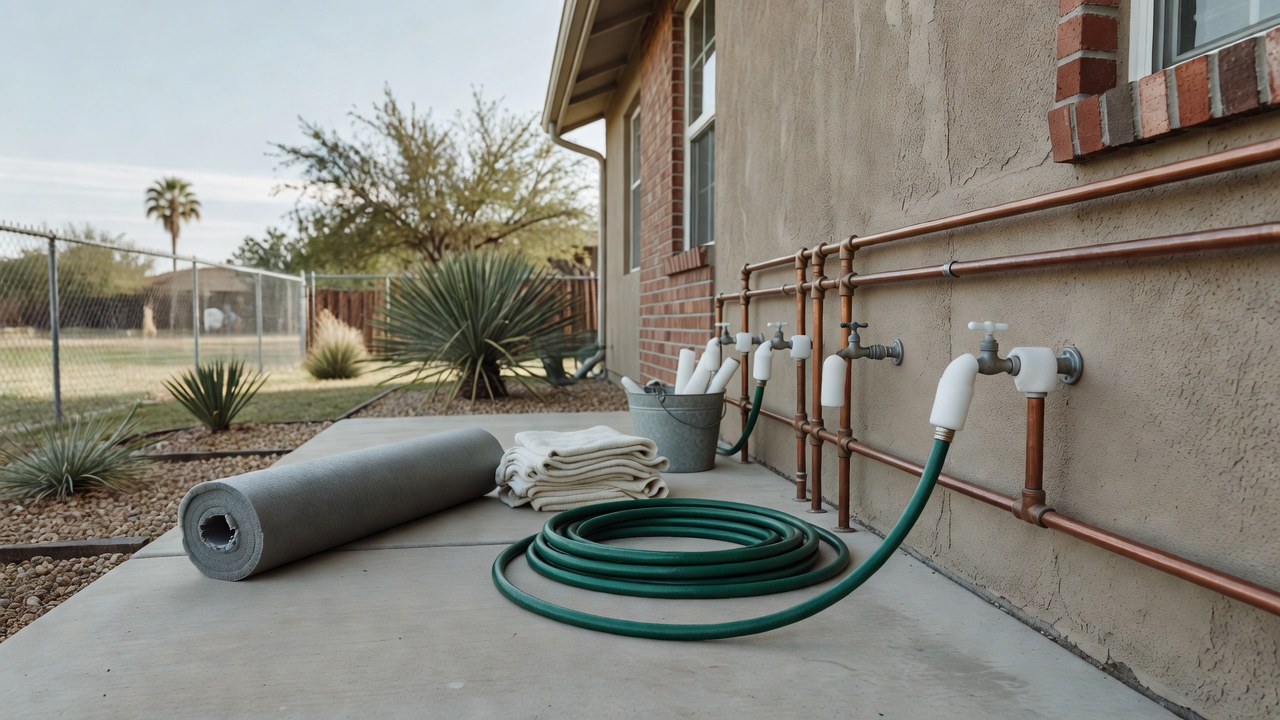
To prepare outdoor pipes for a winter freeze in Weslaco, TX, disconnect garden hoses, shut off and drain exterior water lines, and wrap exposed pipes and hose bibs with insulation. Because Rio Grande Valley homes often lack the deep-set underground pipes and heavy insulation common in northern construction, even brief South Texas freezes can cause burst pipes and costly water damage if outdoor plumbing is left unprotected.
- Disconnect and drain all garden hoses and outdoor hose bibs before freezing temperatures arrive
- Wrap exposed pipes with foam or fiberglass insulation and install covers on every hose bib
- Shut off sprinkler systems and heavily insulate backflow prevention devices ahead of a freeze
- Let both hot and cold faucets drip slowly during hard freezes to relieve internal pressure
- Open under-sink cabinet doors so warm indoor air can circulate around vulnerable pipes
Why Do Outdoor Pipes Freeze in Weslaco During a South Texas Winter?
Unlike northern homes built for extreme cold, Rio Grande Valley homes often have less pipe insulation, leaving outdoor plumbing vulnerable when sudden hard freezes strike. Recognizing this unique regional vulnerability is the first step in preventing costly water damage to your property.
Understanding Rio Grande Valley Freeze Risks
Weslaco and surrounding South Texas communities rarely experience sustained freezing temperatures, so cold snaps typically arrive as brief but intense overnight events. When the thermometer drops into the 20s, unprotected outdoor pipes can freeze solid within hours. Water expands as it turns to ice, building internal pressure that can crack copper, PVC, and PEX lines alike. Once those frozen pipes thaw, leaks and bursts can flood yards, crawl spaces, and interior walls before anyone realizes a line has failed. For year-round maintenance guidance, our seasonal plumbing maintenance checklist for South Texas homes walks through every season the RGV throws at your plumbing.
Why South Texas Construction Differs
In colder regions, homes are built with water lines buried deep below the frost line and pipes routed inside heated interior walls. The Rio Grande Valley takes a different approach: builders commonly install pipes closer to the surface and run hose bibs, irrigation lines, and backflow preventers above ground with minimal insulation. This construction style suits our long, hot summers but leaves outdoor plumbing exposed when a rare hard freeze pushes through. Our proximity to the Gulf means humidity stays high, and moisture clinging to exposed metal fittings can accelerate freeze damage when temperatures plunge. Pairing that structural reality with the fact that many RGV homeowners have never weatherized pipes before, the stage is set for preventable damage during the next cold snap.
How Do You Prepare Outdoor Pipes for a Weslaco Freeze?
Start by disconnecting garden hoses, draining outdoor hose bibs, and shutting off the interior valves that supply exterior lines. Then, wrap exposed outdoor pipes and cover faucets with insulated, waterproof materials. These straightforward steps form the core of any effective freeze preparation routine for South Texas properties.
Disconnect and Store Water Hoses
A connected garden hose traps water inside the hose bib, where it can freeze and expand backward into the pipe and wall. Walk the perimeter of your property and remove every hose from every outdoor spigot. Drain the hoses, coil them loosely, and store them in a garage or shed until warmer weather returns.
Drain and Shut Off Outdoor Lines
- Locate the interior shut-off valve for each exterior hose bib—often found in a utility room, crawl space, or near where the pipe exits the wall.
- Turn that valve to the fully closed position to stop water from flowing to the outside line.
- Open the outdoor faucet all the way so remaining water can drain out under gravity.
- Leave the faucet handle slightly open so any residual water or expanding pressure has a path to escape.
Shutting the interior valve alone does not remove water already sitting between the valve and the spigot—so draining the line completely is what truly makes the difference.
Wrap Exposed Pipes and Hose Bibs
Once lines are drained, wrap any remaining exposed pipe with foam pipe insulation, fiberglass wrap, or heat tape rated for outdoor use. Secure the insulation with weather-resistant tape, then slide a foam or hard-plastic faucet cover over each hose bib. These covers are inexpensive and among the simplest ways to protect outdoor faucets during a Weslaco freeze.
| Material | Best Use | Notes |
|---|---|---|
| Foam pipe insulation tubes | Straight exposed pipe runs along exterior walls | Quick to install and reusable season after season |
| Fiberglass wrap | Odd-shaped fittings, valves, and joints | Conforms to irregular surfaces that rigid foam cannot |
| Heat tape or heat cable | Long exposed runs in unheated areas | Provides active warmth during sustained freezes |
| Foam faucet covers | Hose bibs and outdoor spigots | Inexpensive, simple protection for every faucet |
Should You Let Your Faucets Drip During a Texas Freeze?
Yes, letting both hot and cold faucets drip slowly relieves pressure inside the plumbing system during a hard freeze. Additionally, opening under-sink cabinets allows warm indoor air to circulate around pipes located along exterior walls, adding an extra and effective layer of freeze protection for your home.
Hot vs. Cold Water Dripping
During a hard freeze, drip both the hot and cold faucets at the fixture furthest from where your main water line enters the home. A steady trickle—just enough to keep water moving—is all you need. Many South Texas homeowners ask whether hot or cold matters more. The answer is simple: run both. Hot water lines can freeze just as easily as cold ones, and keeping water moving through every line prevents pressure from building up behind any ice that does form. The dripping faucet gives expanding ice somewhere to go rather than cracking the pipe around it.
Improving Indoor Air Circulation
Pipes running along exterior walls—especially those serving kitchen and bathroom sinks—are vulnerable when warm indoor air cannot reach them. Open cabinet doors beneath sinks so heated room air circulates freely. If you have pets or small children, remove any hazardous cleaning chemicals stored in those cabinets first. Raising your thermostat a few degrees overnight also helps keep the entire home warmer during the coldest hours.
How Do You Drain and Protect Sprinkler Systems and Backflow Preventers?
Turn off your sprinkler system’s main valve, drain any above-ground pipes, and heavily insulate your backflow prevention device. Because these outdoor components sit fully exposed to wind and cold, they require special attention during an unexpected RGV cold snap to avoid cracking and costly replacement.
Shutting Down Irrigation Systems
- Switch the sprinkler controller to the off position so the system does not cycle during a freeze.
- Locate the main irrigation shut-off valve—typically near the water meter or where the irrigation line branches from the main supply.
- Turn that valve to the fully closed position to stop water from entering the system.
- Open any manual drain valves on the irrigation lines to release remaining water.
- If your system includes a pump, drain it according to the manufacturer’s instructions.
Above-ground sprinkler components hold water that cannot drain on its own, so manually clearing those lines is essential. For protecting outdoor plumbing against severe weather year-round, our hurricane season plumbing preparation for RGV homes guide applies similar readiness principles to storm season.
Insulating Backflow Devices
The backflow prevention device is among the most freeze-vulnerable components on any property because it sits above ground with brass valves and water trapped inside. To protect it, wrap the entire assembly with insulation or a purpose-built backflow cover. Secure the wrap with tape or straps so overnight wind cannot peel it away. Remove the insulation once temperatures warm so the device can function normally during irrigation season.
What Should You Do If Your Outdoor Pipes Still Freeze?
If pipes freeze despite your best efforts, never use an open flame to thaw them. Instead, safely apply warm towels or a hair dryer to the frozen section, and immediately turn off the main water supply if a pipe bursts to minimize damage before calling a licensed plumber for repairs.
Safe Thawing Techniques
Start by leaving the affected faucet open so melting water has somewhere to flow as the ice retreats. Then apply gentle, even heat using a hair dryer, a space heater kept at a safe distance, or hot towels wrapped around the pipe. Work from the faucet end back toward the frozen area so escaping water leads the way. Never use a blowtorch, kerosene heater, or any open flame—these can ignite building materials around the pipe and create a far more dangerous situation than a frozen line.
Emergency Shut-off Procedures
Every household member should know where the main water shut-off valve is located before an emergency strikes. If you discover a burst pipe or a visible leak, turn off the main supply immediately to limit flooding, then shut off electricity to any affected areas and call a licensed plumber right away. Our team at Integrity Services & Plumbing offers same-day and same-afternoon appointments throughout the Rio Grande Valley for emergencies just like these.
Preparing outdoor pipes before the next cold front is always easier than repairing frozen or burst lines after the fact. Integrity Services & Plumbing is a family-owned business serving the Rio Grande Valley since January 2021. Founder JR Minson, a master plumber with over 25 years of experience, leads every job from our Harlingen office at 221 E Van Buren Suite 2.
Service calls are $85, and we offer free estimates on home improvement projects. Call us at 956-367-6005 or contact our team online to schedule a winter readiness inspection. For year-round guidance, browse our summer plumbing preparation tips for Rio Grande Valley homes and our spring plumbing inspection checklist for Texas homes.
Frequently asked questions
What can I put on my outside pipes to keep them from freezing?
Wrap exposed outdoor pipes with foam pipe insulation tubes, fiberglass wrap, or heat tape rated for exterior use. Slide foam faucet covers over every hose bib. For irregular shapes like valves and backflow assemblies, fiberglass wrap conforms better than rigid foam and can be secured with weather-resistant tape for a tight seal.
At what temperature do pipes freeze in Texas?
Pipes typically begin to freeze when outdoor temperatures drop to 32 degrees Fahrenheit and stay there for several hours. The real risk in South Texas arrives when temperatures fall into the 20s overnight. Wind chill also accelerates freezing by pulling heat from exposed metal and plastic fittings faster than still air does.
Do you drip hot or cold water to keep pipes from freezing in Texas?
You should drip both hot and cold faucets during a Texas freeze. Many homeowners assume only cold lines need attention, but hot water lines are equally vulnerable. Run a steady trickle from both at the fixture furthest from where your main water line enters the home so that water keeps moving through every line.
How can I drain outdoor plumbing before a freeze?
Shut off the interior valve supplying each exterior hose bib, then open the outdoor faucet fully so gravity can pull remaining water out. Leave the faucet slightly open for pressure relief. For irrigation systems, turn off the main valve, open manual drain valves, and drain any pumps per the manufacturer’s instructions.